Rates in the Walls: How Your Smart Home Is Quietly Informing Your Insurance Company
Photo: Raimond Spekking, CC BY-SA 4.0, via Wikimedia Commons
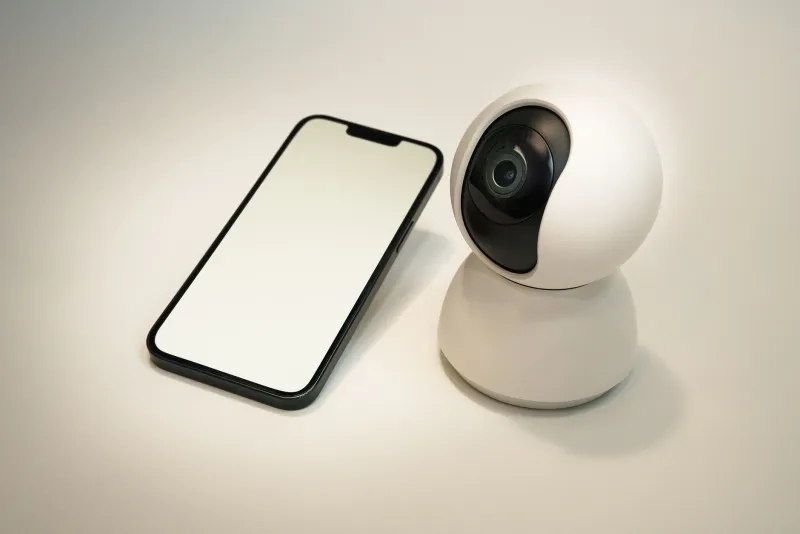
The pitch for smart home technology has always centered on convenience and security. A thermostat that adjusts itself, a doorbell camera that alerts you to deliveries, a water sensor that catches a leak before it becomes a flood — these devices are marketed as tools that work for the homeowner. What is disclosed far less prominently in product literature is that the data these devices generate may also be working for your insurance company, or for intermediaries you have never heard of and never agreed to share information with.
The practice is not hypothetical. It is an expanding segment of the insurance industry, operating largely beneath the awareness of the consumers it affects.
What Your Devices Are Actually Transmitting
To understand the scope of the issue, it helps to inventory what a typical connected home is generating on any given day. A smart thermostat records not just temperature settings but occupancy patterns — when the house is occupied, when it is empty, and how those patterns shift across days, weeks, and seasons. A connected security system logs entry and exit events with timestamps precise enough to reconstruct a detailed daily routine. Smart appliances, from refrigerators to washing machines, generate usage logs that can indicate whether a home is occupied by one person or several, and whether that household's patterns suggest an owner who travels frequently.
Individually, each data stream is modest. Aggregated and analyzed, they constitute a behavioral profile of considerable granularity — one that insurers have identified as potentially predictive of risk in ways that traditional underwriting variables do not capture.
The insurance industry has a long history of seeking more precise risk prediction. Credit scores, despite their contested relationship to claims behavior, became standard underwriting inputs. Telematics devices in automobiles, which monitor driving behavior in exchange for potential premium discounts, have been adopted by millions of American drivers. Smart home data represents the next frontier of that same actuarial ambition.
The Data Broker Layer
In most cases, insurance companies are not collecting smart home data directly. The more common pathway runs through a layer of data brokers and analytics firms that aggregate information from device manufacturers, app platforms, and third-party integrations, then package and sell it to insurers and other enterprise buyers.
Device manufacturers frequently include data-sharing permissions in their terms of service — documents that the majority of consumers do not read and that most who do read would find difficult to parse. A smart home platform's privacy policy may authorize the sharing of "anonymized usage data" with "business partners" for "product improvement and research purposes." Those business partners may include firms whose primary revenue model is reselling that data to insurance underwriters.
Several large data brokers operating in the US market have developed specific insurance-facing products built on behavioral signals derived from connected devices. LexisNexis Risk Solutions and Verisk Analytics, both of which supply data products to the insurance industry, have publicly described capabilities that incorporate non-traditional data sources into risk modeling. The specific composition of those data inputs is not always disclosed.
Location Signals and the Absence Problem
One of the more consequential categories of smart home data for insurance purposes is what researchers call "presence inference" — the ability to determine, with reasonable confidence, when a home is unoccupied. This inference matters because vacancy is one of the strongest predictors of certain property loss events, including theft and water damage from undetected leaks.
A home that is frequently empty, according to its connected devices, may be scored differently than one with consistent occupancy — potentially resulting in higher premiums or modified coverage terms. The homeowner who travels regularly for work, or who maintains a second residence, may find that their smart home's efficiency in detecting their absence is working against their financial interests.
Beyond insurers, the same presence data carries significant implications for physical security. If behavioral profiles derived from smart home devices can be accessed by insurers through data broker channels, the question of who else has access to equivalent information — and through what pathways — is not an abstract one.
What Consumers Can Do
Limiting exposure does not require abandoning connected home technology entirely, but it does require deliberate configuration choices that manufacturers do not typically surface prominently.
Review and restrict data-sharing settings at the device and platform level. Most smart home ecosystems include privacy dashboards that allow users to opt out of data sharing beyond what is necessary for core functionality. These settings are rarely enabled by default. Allocating time to locate and configure them is among the most effective steps available to consumers.
Audit connected third-party applications. Smart home platforms frequently allow integration with third-party apps that request access to device data. Each integration represents an additional potential disclosure pathway. Reviewing which applications have been granted access and revoking permissions for those no longer in active use reduces the surface area of data exposure.
Read insurance agreements for data-sharing disclosures. An increasing number of homeowners insurance policies include provisions related to smart home data, sometimes embedded in telematics or discount program terms. Understanding what you have agreed to share — and with whom — is a prerequisite for making informed decisions about participation.
Consider network segmentation. Placing smart home devices on a separate network segment, isolated from devices that handle sensitive personal or financial information, limits the potential consequences of a device-level compromise while also providing a degree of traffic visibility that can reveal unexpected data transmissions.
The Regulatory Gap
Federal privacy law in the United States does not comprehensively regulate the collection and commercial use of smart home behavioral data. The patchwork of state-level frameworks — California's Consumer Privacy Act being the most expansive — provides some recourse for residents of those states but leaves the majority of American consumers with limited statutory protection.
The Federal Trade Commission has taken enforcement action against data brokers for deceptive practices, and several state attorneys general have pursued cases involving unauthorized data sharing. However, the pace of regulatory development has not matched the pace of data collection innovation.
For now, the most reliable protection available to the American homeowner is awareness — understanding that the intelligent devices installed for convenience are also, in many cases, intelligent enough to report on their owners.