Pixels With a Purpose: How QR Codes Became Cybercrime's Most Overlooked Attack Surface
Pixels With a Purpose: How QR Codes Became Cybercrime's Most Overlooked Attack Surface
There is a small black-and-white square on the parking meter down the street from you. You have probably scanned it without a second thought, pulling out your phone, opening the camera, and tapping the link that appeared before you had even finished reading it. That instinct — fast, frictionless, trusted — is precisely what a growing class of cybercriminals is counting on.
The technique has acquired a name in the security community: quishing, a portmanteau of QR code and phishing. And while the word may sound almost whimsical, the consequences for victims are anything but. Over the past two years, federal agencies, corporate security teams, and consumer protection organizations have watched quishing incidents climb sharply across the United States, targeting everyone from commuters at city parking kiosks to employees receiving what appear to be routine HR communications.
The Pandemic Hangover Nobody Warned You About
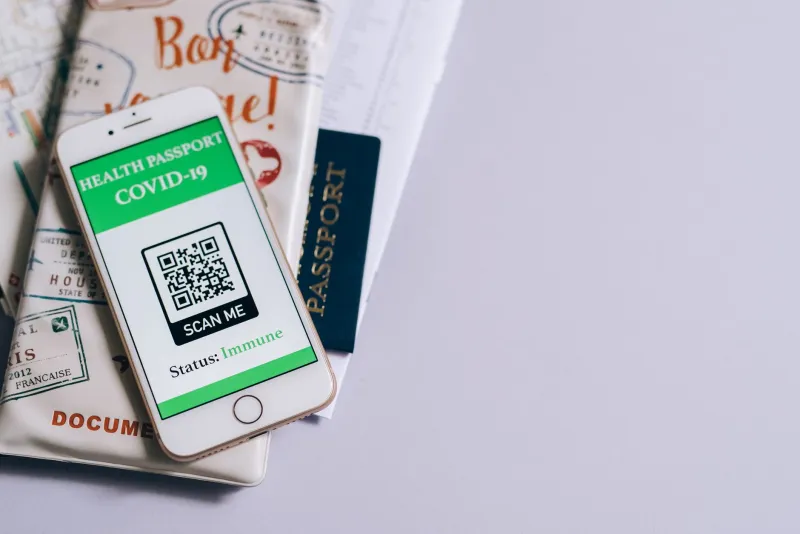
QR codes existed for decades before COVID-19, largely confined to logistics and inventory management. The pandemic changed everything. Restaurants replaced laminated menus with table-mounted codes. Hospitals used them for contactless check-in. The federal government distributed them on vaccine information pamphlets. By 2022, an estimated 89 million Americans had scanned a QR code — a figure that had more than doubled in two years.
Criminals observed this behavioral shift with considerable interest. The same frictionless trust that made QR codes a public-health convenience made them an ideal delivery mechanism for credential theft. Unlike a suspicious hyperlink in an email — where a user might hover over the text and notice that "paypal.com" resolves to something else entirely — a QR code reveals nothing to the naked eye. There is no URL to inspect, no domain to scrutinize. The code is simply a pattern, and patterns feel neutral.
How the Attack Actually Works
Quishing attacks generally fall into two broad categories: digital distribution and physical substitution.
In digital campaigns, attackers embed malicious QR codes inside emails, PDF attachments, or even Microsoft Office documents. This approach has proven remarkably effective at evading enterprise email security filters, which are built to scan hyperlinks and attachments for known malware signatures. A QR code embedded as an image carries no hyperlink metadata that a filter can evaluate — the URL is, in effect, hidden inside a picture. According to research published by multiple cybersecurity firms in 2023 and 2024, QR-code-based phishing emails increased by several hundred percent over prior years, with a significant portion targeting employees at mid-sized American companies.
The physical substitution method is, in some respects, more brazen. Attackers print stickers bearing fraudulent QR codes and paste them directly over legitimate ones in high-traffic public spaces. Parking meters in cities including San Francisco, Austin, and Houston have been documented targets. The victim scans what they believe is the official payment portal, enters their payment card information, and walks away having handed their credentials directly to a threat actor. Some campaigns have also targeted restaurant menus, retail store signage, and even package-delivery notices left at front doors — the latter often mimicking USPS or UPS tracking pages to harvest login credentials or payment data.
Once the victim scans the code and follows the link, they typically arrive at a convincing replica of a legitimate website. These credential-harvesting pages are frequently hosted on domains registered only days earlier, often incorporating the name of the spoofed brand alongside innocuous words to appear plausible at a glance. The victim enters a username, a password, perhaps a credit card number — and the attacker captures it in real time.
Why Older Smartphone Users Face Elevated Risk
While quishing is a threat to anyone with a smartphone, security researchers and consumer advocates have consistently noted that older Americans face a disproportionate level of exposure. The reasons are structural rather than a reflection of intelligence or caution.
First, many older users were introduced to QR codes during the pandemic specifically as a trusted technology — one promoted by hospitals, pharmacies, and government agencies. That association with institutional legitimacy creates a strong psychological anchor that is difficult to override.
Second, the mechanics of URL inspection are less intuitive on a mobile device than on a desktop browser. Even a security-conscious user on a laptop knows to hover over a link before clicking. On a smartphone, the camera app surfaces a URL in a small notification bar that disappears within seconds, and many users tap it before they have had a chance to read it carefully.
Third, older users are statistically more likely to be targeted by the specific lures that quishing campaigns favor — package-delivery notices, Medicare or insurance portals, and utility payment pages — because these services map closely to the concerns of an older demographic.
Real-World Cases That Illustrate the Stakes
In early 2024, the FBI's Internet Crime Complaint Center issued a public advisory warning Americans about a surge in quishing attacks targeting corporate employees, specifically those in finance and human resources departments. In several documented incidents, attackers sent QR-coded emails purporting to come from internal IT departments, instructing recipients to re-authenticate their Microsoft 365 accounts through a linked portal. Employees who complied handed over valid corporate credentials, which were subsequently used to initiate business email compromise schemes.
Separately, the Federal Trade Commission received a notable volume of consumer complaints related to fraudulent parking meter QR codes throughout 2023, with victims reporting unauthorized charges to payment cards after scanning what they believed were official municipal payment systems. Several city governments issued public warnings and dispatched workers to physically audit and replace compromised signage.
Five Concrete Steps Before You Scan Anything
Awareness alone is insufficient. The following practices materially reduce the risk of falling victim to a quishing attack.
Inspect the physical sticker. Before scanning any QR code in a public space, look closely at the surface. A fraudulent sticker is often placed directly over the original code. Check for raised edges, misaligned borders, or a slightly different texture or finish. If anything looks inconsistent, do not scan.
Preview the URL before tapping. Most modern smartphone cameras display a URL preview before opening the browser. Read that URL carefully. Verify that the domain matches the organization you expect — and be alert to subtle misspellings or unusual top-level domains such as .xyz, .info, or .shop in contexts where you would expect .gov, .com, or .org.
Use a dedicated QR scanner with link-preview functionality. Several reputable security vendors offer QR scanning applications that display the full destination URL and flag known malicious domains before any connection is made. These tools add a meaningful layer of scrutiny that the native camera app does not provide.
Never enter credentials or payment information through a QR-linked page without independent verification. If a QR code directs you to a login portal, close the browser and navigate to the organization's website directly by typing the address. If the request was legitimate, you will find the same prompt there.
Report suspicious codes. Physical QR code tampering on municipal infrastructure — parking meters, public transit signage, government buildings — should be reported to the relevant city or county authority. Digital quishing emails received at work should be forwarded to your organization's security or IT team immediately.
The Bigger Picture
Quishing is, at its core, a social-engineering problem dressed in technological clothing. QR codes are not inherently dangerous; they are a neutral data-delivery format. What makes them hazardous is the gap between how quickly humans have learned to trust them and how slowly they have learned to interrogate them.
The same cognitive shortcuts that make any phishing attack effective — urgency, familiarity, frictionless action — are amplified when the attack vector is a physical object in the real world rather than a suspicious email in an inbox. Closing that gap requires the same discipline that security professionals have spent years trying to instill around hyperlinks: slow down, look closely, and verify before you act.
The square of pixels is not going anywhere. Neither, unfortunately, are the people who have learned to hide inside it.