Relics Under Siege: How America's Aging Industrial Control Systems Became a Nation-State Playground
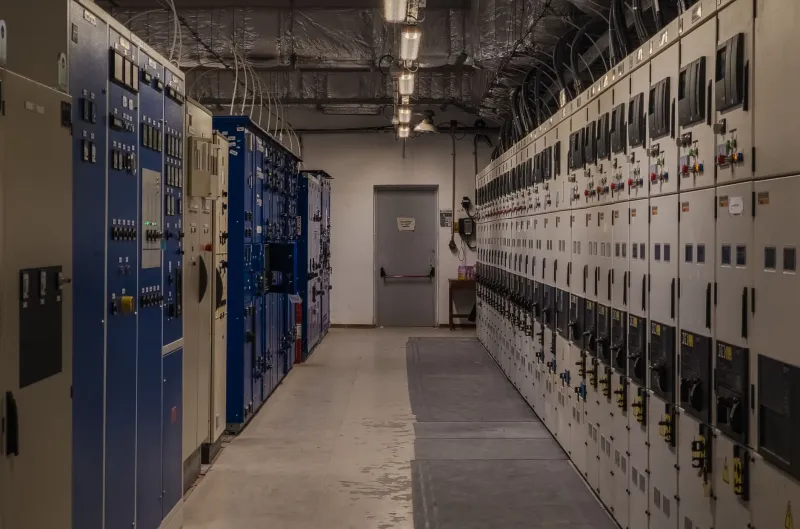
Relics Under Siege: How America's Aging Industrial Control Systems Became a Nation-State Playground
Somewhere in a mid-sized American city, a water treatment facility is quietly humming along. Pumps cycle. Chlorine levels are adjusted. Pressure readings feed into a control room display that an operator glances at between sips of coffee. What that operator almost certainly does not know is that the programmable logic controller governing one of those pumps — a device installed during a Clinton-era infrastructure upgrade — is reachable from the open internet, running firmware that has not been patched in a decade, and has been pinged by a foreign IP address eleven times in the past month.
This scenario is not hypothetical. Variants of it are playing out across the United States with a frequency that federal cybersecurity agencies have described, with increasing urgency, as a national security concern.
The Systems Nobody Thought to Protect
Operational technology, or OT, is the broad category that encompasses the hardware and software controlling physical processes in critical infrastructure. It includes SCADA systems — supervisory control and data acquisition networks — as well as the individual programmable logic controllers, or PLCs, that execute specific mechanical instructions. These are the systems that open valves, regulate voltage, spin turbines, and monitor pipeline pressure.
For most of their operational lifespan, these devices existed in deliberate isolation. They ran on proprietary protocols, communicated over dedicated serial connections, and were physically separated from corporate networks and the internet entirely. Security, in that context, meant a locked door and a badge reader.
The problem began when efficiency demands, remote monitoring capabilities, and cost-cutting pressures pushed organizations to bridge that isolation. Gradually, OT networks were connected to corporate IT infrastructure, and through it — intentionally or not — to the internet. Legacy devices designed with no authentication mechanisms, no encryption, and no concept of network-borne threats were suddenly reachable by anyone with a search engine and the right query string.
Shodan, the internet-of-things search engine used extensively by both security researchers and malicious actors, routinely surfaces thousands of exposed industrial control system interfaces. Some require no credentials whatsoever to access.
The IT-OT Divide: A Structural Blind Spot
Understanding why these exposures persist requires appreciating a cultural and organizational divide that runs deep inside most utilities and industrial operators. IT security teams speak the language of firewalls, endpoint detection, and zero-trust architecture. OT engineers speak the language of uptime, latency tolerances, and process continuity. The two groups frequently operate in separate silos with minimal coordination.
For an IT security professional, patching a vulnerable system is a routine response to a known risk. For an OT engineer, taking a PLC offline to apply a firmware update means potentially halting a production process, disrupting water delivery, or triggering a cascade of alarms across an interconnected industrial network. The calculus is fundamentally different, and it has historically favored availability over security.
This divide creates a dangerous accountability gap. IT teams often lack visibility into what OT assets exist on the network. OT teams often lack the cybersecurity expertise to recognize when one of their systems has been quietly enumerated or compromised. Threat actors have learned to exploit exactly this seam.
Nation-State Actors Are Already Inside the Perimeter
Federal authorities have been sounding alarms with increasing specificity. In 2021, a threat actor accessed the SCADA system of the Oldsmar, Florida water treatment plant and briefly attempted to increase sodium hydroxide levels to dangerous concentrations — a near-catastrophe averted only because an alert operator noticed the cursor on his screen moving without his input. The incident exposed how trivially accessible some municipal infrastructure systems had become.
More recently, advisories from CISA, the NSA, and the FBI have identified threat clusters linked to the People's Republic of China, Iran, and Russia as actively conducting reconnaissance against U.S. critical infrastructure OT environments. The Volt Typhoon campaign, attributed to Chinese state-sponsored actors and extensively documented by federal agencies, was notable not for immediate destructive intent but for the methodical persistence with which it established footholds inside energy, water, and communications infrastructure — positioning itself for potential future disruption.
This pre-positioning strategy is particularly alarming to analysts. The goal does not appear to be immediate sabotage. It appears to be the quiet installation of persistent access that could be activated during a geopolitical crisis — a capability to darken a city, contaminate a water supply, or disrupt fuel delivery at a moment of strategic choosing.
Why Legacy Devices Are Especially Dangerous
Modern industrial environments are not uniformly antiquated. Many large utilities have invested in newer OT infrastructure with improved security features. But the reality of critical infrastructure economics means that operational lifespans for control system hardware routinely stretch across twenty to thirty years. A PLC installed in 2001 may be running the same firmware it shipped with, because the manufacturer no longer supports it, because testing a new version requires an operational shutdown nobody can schedule, or simply because the device works and nobody has had a reason to touch it.
These legacy devices share several characteristics that make them attractive targets. They typically lack logging capabilities, meaning malicious activity leaves no forensic trail. They often communicate over cleartext protocols, meaning credentials — where they exist at all — can be intercepted trivially. And they frequently run embedded operating systems with known, unpatched vulnerabilities that exploit code for is freely available on underground forums.
When a threat actor identifies one of these devices exposed to the internet, the effort required to establish access can be measured in minutes.
The Regulatory Gap and What Is Being Done
U.S. critical infrastructure regulation is fragmented across sector-specific agencies and a patchwork of voluntary frameworks. The energy sector operates under mandatory cybersecurity standards enforced by NERC. Water utilities, by contrast, face far less prescriptive requirements, and thousands of small municipal systems lack the resources or expertise to implement even baseline OT security controls.
CISA's ongoing efforts to expand its OT security advisories and its free vulnerability scanning services for critical infrastructure operators represent meaningful steps. The agency's cross-sector performance goals for critical infrastructure cybersecurity, published in 2022 and updated since, establish clearer benchmarks for asset inventory, network segmentation, and incident response planning.
Several legislative proposals have sought to mandate minimum cybersecurity standards for water systems specifically, motivated in part by the Oldsmar incident and subsequent discoveries of similarly exposed municipal infrastructure. Progress has been slow, reflecting the political complexity of imposing federal mandates on locally governed utilities.
What Defenders Must Prioritize
For organizations responsible for OT environments, security practitioners consistently point to a short list of foundational actions that would meaningfully reduce exposure. Comprehensive asset inventory — knowing precisely what devices exist on the network and what they are running — is a prerequisite for everything else. Network segmentation that enforces strict boundaries between OT and IT environments limits lateral movement if either side is compromised. Removing remote access capabilities from devices that do not require them eliminates an entire class of exposure.
Perhaps most critically, bridging the cultural divide between IT security and OT engineering requires deliberate organizational investment. Joint exercises, shared visibility platforms, and clearly defined incident response ownership across both domains are not luxuries. Given the threat environment federal agencies are now describing in public advisories, they are operational necessities.
The ghost in the grid is not a metaphor. It is a patient, well-resourced adversary that has already found the door and is waiting to see whether anyone notices it is ajar.