Your Phone Number Is a Master Key: The Anatomy of a SIM Swap Attack
For most Americans, a phone number feels like a trivial piece of personal information — something printed on a business card, handed to a pizza delivery app, or rattled off without a second thought. In the hands of a determined criminal, however, that same ten-digit string can serve as a skeleton key capable of unlocking bank accounts, cryptocurrency wallets, email inboxes, and social media profiles within the span of a few minutes.
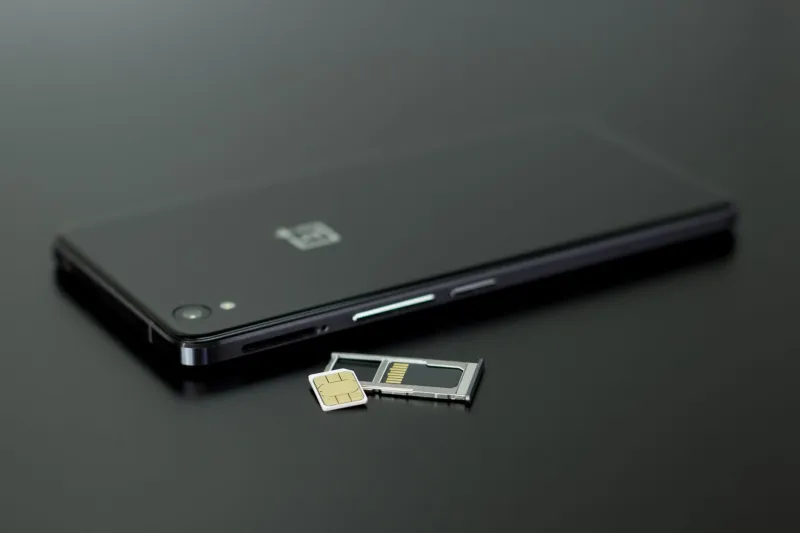
SIM swapping — the fraudulent transfer of a victim's phone number to a SIM card controlled by an attacker — has evolved from a niche technical exploit into a mainstream criminal enterprise. Federal prosecutors and cybersecurity researchers have documented hundreds of cases across the United States, ranging from college students who stole millions in cryptocurrency to organized rings that bribed carrier employees for inside access. Understanding how this attack works, and why it is so effective, is the first step toward defending against it.
How the Number Gets Stolen
The mechanics of a SIM swap begin long before any phone call is made to a carrier. Attackers typically spend days or weeks in reconnaissance, aggregating personal information about their target from data broker websites, previous breach dumps, and social media profiles. Date of birth, home address, the last four digits of a Social Security number — all of this feeds into a profile designed to pass a carrier's identity verification process.
From there, attackers pursue one of two primary vectors.
The first is social engineering. A fraudster calls a carrier's customer service line — or walks into a retail store — impersonating the account holder. Armed with the harvested personal details, they request a SIM transfer to a new device, claiming a lost or damaged phone. When the representative asks security questions, the attacker answers with information pulled from public records or purchased data. If the first representative pushes back, the attacker simply hangs up and tries again with a different agent, a technique researchers sometimes call "vishing cycling."
The second vector is insider corruption. Court records from multiple federal cases reveal that criminal networks have deliberately recruited or bribed carrier store employees to execute unauthorized SIM swaps from the inside. In 2023, the FBI and the Department of Justice brought charges in several such schemes, including cases where employees at major carriers received cash payments of hundreds to thousands of dollars per swap. Because the transaction originates from a trusted internal account, it often bypasses the fraud-detection layers designed to catch external manipulation.
The Cascade That Follows
Once the attacker's SIM card is live on the victim's number, the damage accelerates rapidly. Within seconds, every SMS message intended for the victim — including one-time passcodes sent by banks, email providers, and financial platforms — is redirected to the attacker's device.
The sequence is almost algorithmic in its efficiency. The attacker navigates to a target account, such as Gmail or a cryptocurrency exchange, and initiates a password reset. The platform sends a verification code via SMS. The attacker receives it, enters it, and immediately changes the account password. The victim is locked out. The attacker moves to the next account, using the newly compromised email address to trigger additional resets. Within minutes, an entire digital identity can be stripped away.
Documented cases illustrate the scale of potential losses. In one widely reported federal prosecution, a group of young attackers used SIM swapping to steal more than $400 million in cryptocurrency from a single victim — a figure that represents one of the largest individual crypto thefts ever recorded in the United States. In other cases, victims lost life savings, had their identities used to open fraudulent credit lines, and spent years untangling the financial wreckage.
Why SMS Two-Factor Authentication Is the Weak Link
The uncomfortable truth at the center of SIM swapping is that SMS-based two-factor authentication — the security feature that millions of Americans rely on precisely because it is supposed to add a layer of protection — is the mechanism the attack exploits. When a platform sends a six-digit code to a phone number, it is not authenticating the person; it is authenticating control of that number. If an attacker controls the number, the platform has no way to distinguish them from the legitimate account holder.
Security researchers have advocated for years against using SMS as an authentication factor for high-value accounts. The underlying protocol that governs SMS routing, known as SS7, contains structural vulnerabilities that sophisticated nation-state actors have also exploited independently of SIM swapping. While most everyday users are not targeted at the nation-state level, the point stands: a phone number is a weak anchor for identity.
App-based authenticators — such as Google Authenticator, Authy, or Microsoft Authenticator — generate time-sensitive codes locally on a device without routing through the carrier network, making them immune to SIM swap attacks. Hardware security keys, such as those compliant with the FIDO2 standard, offer an even stronger guarantee. Neither of these methods can be hijacked by convincing a carrier employee to transfer a phone number.
What Carriers Are — and Are Not — Doing
Following years of pressure from consumer advocates and federal regulators, the major U.S. wireless carriers have introduced additional safeguards. Verizon, AT&T, and T-Mobile each offer some form of account PIN or passcode requirement for SIM change requests, and some carriers allow customers to place a "SIM lock" or "number lock" on their account that blocks transfer requests entirely without additional in-person verification.
The Federal Communications Commission finalized rules in late 2023 requiring carriers to implement stronger authentication procedures before processing SIM transfers and to notify customers immediately when a SIM change is initiated. Whether these measures will prove sufficient against insider threats and persistent social engineering remains an open question among security professionals.
Concrete Steps to Protect Your Account Today
The following actions represent the most effective defenses currently available to American consumers.
Contact your carrier and enable every available account lock. Ask specifically about SIM lock, number lock, or port freeze features. Set a strong, unique account PIN that is not derived from your date of birth or the last four digits of your Social Security number — the two most commonly guessed values.
Remove your phone number as a recovery option wherever possible. For email accounts, banking platforms, and cryptocurrency exchanges, navigate to security settings and replace SMS-based two-factor authentication with an authenticator app or a hardware security key.
Treat your phone number like a password. Avoid publishing it in public directories, on social media profiles, or on professional networking sites unless strictly necessary. The less widely it circulates, the fewer data points attackers can harvest.
Monitor for unexpected loss of cellular service. A sudden loss of signal on your phone — particularly if it persists and is not explained by a network outage — may indicate that your number has already been transferred. Contact your carrier immediately by an alternative means if this occurs.
Place a freeze on your credit reports. Because SIM swapping is frequently a precursor to broader identity theft, freezing your credit with Equifax, Experian, and TransUnion limits the ability of attackers to open new accounts in your name using information they may have gathered during reconnaissance.
The Takeaway
SIM swapping succeeds not because it is technically sophisticated, but because it exploits the trust architecture of systems that were never designed to withstand determined impersonation. Carriers trust their employees. Platforms trust phone numbers. Consumers trust that the security features they have been told to use are actually secure. Attackers exploit every layer of that trust simultaneously.
For now, the most reliable defense is to remove the phone number from the equation wherever possible — and to treat any account that still relies on SMS verification as a vulnerability waiting to be discovered.