Listening Between the Lines: The Granular Behavioral Profile Your Smart Home Is Building Without Your Knowledge
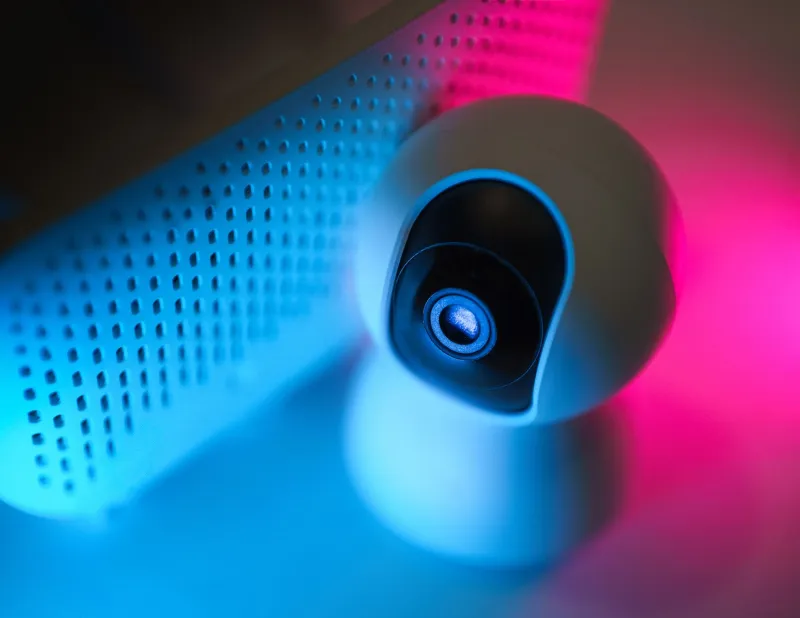
The smart speaker on your kitchen counter is not just a speaker. The thermostat in your hallway is not just a thermostat. The connected lightbulbs in your bedroom, the Wi-Fi-enabled coffee maker on your counter, the sleep-tracking pad under your mattress — each of these devices is a data collection endpoint, and collectively they are assembling a portrait of your daily life with a resolution that would have been unimaginable to a surveillance operation a decade ago.
The conversation around smart home privacy has, until recently, focused on a relatively narrow set of concerns: always-on microphones, location tracking, and the occasional embarrassing story about a voice assistant recording a private conversation. Those concerns are legitimate. They are also incomplete. The more consequential data flow is quieter, more continuous, and far more difficult to audit.
What the Devices Are Actually Measuring
Consider what a moderately equipped American smart home transmits in the course of a single day. A smart thermostat records not just temperature settings but the precise times at which the household wakes, leaves, returns, and sleeps — inferred from motion sensors and occupancy detection. A connected dishwasher or washing machine logs cycle times, giving data processors a window into meal schedules and laundry routines. Smart plugs attached to conventional appliances report power draw patterns that can be disaggregated, through a technique called non-intrusive load monitoring, to identify which specific devices are running at any given moment.
Sleep trackers and smart mattresses record respiration rate, heart rate variability, and movement throughout the night. Some smart bathroom scales transmit weight and body composition data. Motion sensors in smart security systems map movement through rooms at specific hours. Voice assistants log not just intentional queries but ambient audio segments that triggered wake-word detection — and, in some documented cases, segments that did not.
No single data point is particularly alarming in isolation. The alarm is in the aggregation. A data broker with access to thermostat telemetry, appliance usage logs, and sleep sensor data from a single household can infer, with reasonable confidence, whether the occupants are employed and what their work schedule is, whether there are children in the home and what their school schedule looks like, whether a resident is ill or experiencing disrupted sleep, and whether the household's routines have changed in ways that might indicate life events — a new baby, a death, a job loss, a relationship change.
The Contractual Architecture of Consent
The legal mechanism that enables this data collection is, in most cases, a terms of service agreement that users accepted during device setup. These agreements are rarely short and almost never written in plain language. Privacy researchers at several US universities have documented smart home device terms of service that explicitly authorize data sharing with unnamed "third-party partners" for purposes including "product improvement," "personalized advertising," and "market research" — language broad enough to encompass nearly any downstream use.
The Federal Trade Commission has taken enforcement action against data brokers in adjacent industries, and there is active legislative discussion at both the federal and state level about IoT-specific privacy standards. California's Consumer Privacy Act and its subsequent amendments provide some of the strongest existing protections for US consumers, including rights to know what data is collected and to opt out of its sale. But enforcement is inconsistent, and the majority of Americans live in states without comparable statutory frameworks.
Device manufacturers, for their part, frequently argue that data sharing enables the features users value — personalized routines, predictive automation, energy efficiency recommendations. That argument is not entirely without merit. It is also not an argument that requires the data to leave the household, be retained indefinitely, or be sold to parties with no relationship to the original product.
The Data Broker Connection
The downstream destination for much of this telemetry is the data broker industry — a largely unregulated sector that aggregates information from hundreds of sources to build and sell consumer profiles. Several major data brokers have established formal partnerships with smart home device manufacturers. Others purchase data from intermediaries who aggregate it from multiple device ecosystems before resale.
The profiles that result are not anonymous in any meaningful sense. Cross-referencing behavioral telemetry with publicly available records — property ownership, voter registration, social media accounts — allows brokers to re-identify individuals from ostensibly anonymized datasets with well-documented reliability. A 2019 study published in Nature demonstrated that as few as four behavioral data points are sufficient to uniquely identify eighty-three percent of individuals in a large anonymized mobility dataset. The principle applies equally to smart home telemetry.
Practical Steps for US Households
Complete elimination of data collection from smart home devices is not realistic for most users without abandoning the devices entirely. Meaningful reduction is achievable with deliberate configuration.
Audit your device inventory. Most households have more connected devices than they actively track. Begin by identifying every device on your home network. Your router's admin interface, or a network scanning application such as Fing, will surface devices that may not be immediately obvious.
Review privacy settings on each platform. Major smart home ecosystems — Amazon Alexa, Google Home, Apple HomeKit — provide privacy dashboards that allow users to review stored data, delete voice recordings, and restrict certain sharing categories. These settings are not always prominently surfaced, but they exist and should be configured explicitly rather than left at defaults.
Segment your network. Placing IoT devices on a separate Wi-Fi network — most modern routers support a guest network configuration — limits their ability to communicate with other devices on your primary network and contains the impact of any device compromise.
Disable features you do not use. Voice purchasing, third-party skill integrations, and activity-sharing features expand the data collection surface without necessarily adding proportionate value. Disabling them reduces exposure.
Read the privacy policy before purchase. Device manufacturers are required to disclose their data practices, and the privacy policy is a more reliable guide than marketing copy. Specifically look for language about third-party data sharing and data retention periods.
Consider local-processing alternatives. A small but growing ecosystem of smart home platforms — Home Assistant being the most widely adopted — is designed to process data locally without cloud transmission. The setup complexity is higher, but the privacy posture is substantially different.
The behavioral data your home generates is among the most intimate information you produce. Treating the devices that collect it with the same scrutiny you would apply to any other data-sharing relationship is not paranoia. It is proportionate caution.