Face Value: The Hidden Vulnerabilities Behind Biometric Authentication and the Accounts Criminals Are Quietly Targeting
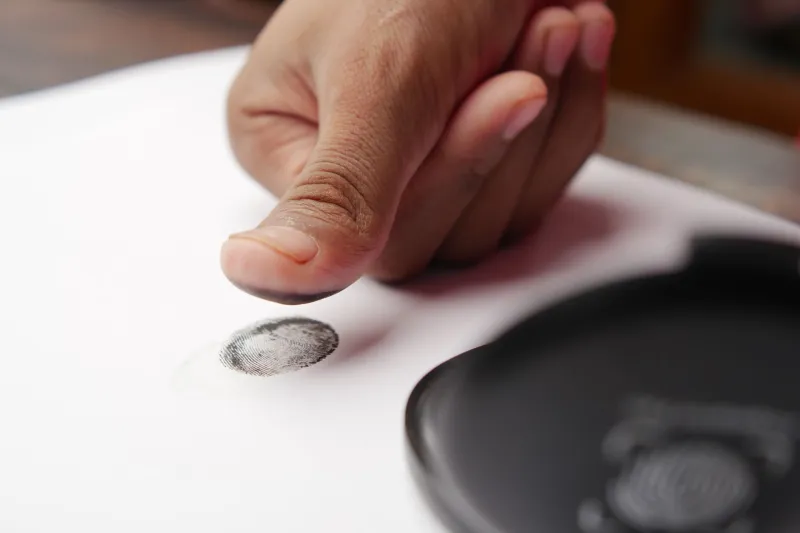
The fingerprint sensor has become one of the most trusted interfaces in modern American life. Millions of people use it daily to access banking applications, authorize purchases, unlock password managers, and verify their identity to government services. Facial recognition has followed the same trajectory, embedded in everything from airport boarding gates to workplace time-tracking systems. Both technologies carry an intuitive authority that typed passwords have never managed to project: they feel like proof, not just a claim.
That feeling, security researchers argue, is precisely the problem.
What Biometrics Actually Protect — And What They Do Not
To understand the vulnerability landscape, it is necessary to separate two distinct functions that biometric authentication performs. The first is device-level access control — unlocking a smartphone or laptop. The second is account-level authentication — verifying identity to a remote service. These are not the same security problem, and conflating them is a persistent source of consumer misunderstanding.
When you unlock your iPhone with Face ID, the biometric match occurs entirely on the device, within a dedicated hardware enclave. Your facial geometry is never transmitted to Apple's servers. This model is, by design, resistant to remote compromise. An attacker cannot steal your face from a database breach because the database does not hold it.
The account-level story is substantially more complicated. When a banking app uses your fingerprint to authorize a login, the biometric check typically unlocks a cryptographic credential stored on the device, which is then used to authenticate to the bank's servers. The biometric itself is not transmitted — but the credential it unlocks can be. If that credential is a session token, and if that token is stolen through a separate attack vector (a topic HydraWatch has examined in depth in previous coverage), the biometric layer has been effectively bypassed without ever being attacked directly.
This architectural reality means that biometric authentication, however robust at the point of touch, does not eliminate the vulnerability surface. It relocates it.
Spoofing: From Academic Exercise to Operational Threat
Beyond architectural considerations, the biometric sensors themselves carry exploitable weaknesses that have been documented across more than a decade of security research.
Fingerprint spoofing — the creation of artificial replicas capable of defeating capacitive or optical sensors — has been demonstrated using materials as accessible as gelatin, silicone, and commercially available 3D printing resin. A landmark 2019 study by researchers at New York University and Michigan State University generated synthetic "DeepMasterPrints" — artificially constructed fingerprint images that exploited statistical patterns in partial-print matching to achieve false acceptance rates as high as 26 percent against mobile sensors. The research did not require a physical fingerprint from the target. It exploited the probabilistic nature of how partial fingerprint data is matched.
Facial recognition systems have faced their own spoofing record. Two-dimensional photo attacks against early face-unlock implementations were well-documented; modern liveness detection has raised the bar, but not eliminated it. Researchers at the University of North Carolina demonstrated in 2016 that photorealistic 3D models constructed from publicly available social media photos could defeat multiple commercial facial recognition systems. More recent work has demonstrated that adversarial makeup patterns and printed masks can confuse neural network-based recognition under specific conditions.
The practical barrier to these techniques varies significantly by implementation quality. High-security deployments — such as Apple's Face ID, which uses structured infrared light and a depth sensor — have proven substantially more resistant than budget Android implementations relying solely on a front-facing camera. The consumer market, however, spans the full quality spectrum, and many users have no visibility into which tier their device occupies.
The Criminal Calculus
Law enforcement and threat intelligence reporting has begun to surface a pattern that is both counterintuitive and logically coherent: certain criminal actors are deliberately targeting accounts protected by biometric authentication rather than avoiding them.
The reasoning follows from the psychology of user behavior. Accounts protected by biometrics are, statistically, less likely to also have a strong, unique password — because users who rely on biometrics often treat them as a replacement for password discipline rather than a complement to it. A 2022 survey by the FIDO Alliance found that a substantial proportion of American consumers admitted to reusing passwords on accounts where biometric unlock was available, reasoning that the biometric made the password less important.
For a criminal who has acquired a credential through a phishing campaign or data breach, an account whose owner believes it is secured by their fingerprint may be easier to access through the password fallback than an account whose owner has invested in a 20-character randomly generated credential. Most biometric-protected accounts maintain a PIN or password fallback by design — because biometrics can fail due to injury, environmental conditions, or sensor error. That fallback is often the weakest link in the chain.
Additionally, account recovery flows — the processes by which users regain access after a failed biometric — frequently rely on email verification, SMS codes, or knowledge-based questions. All of these represent attack surfaces that exist entirely outside the biometric layer and are well-understood by criminal actors.
The Backend Remains Exposed
Even setting aside spoofing and fallback exploitation, the infrastructure behind biometric authentication introduces its own risk profile. While on-device biometric storage is now standard for major platforms, the broader ecosystem of third-party biometric service providers — companies offering fingerprint or facial recognition as a service to businesses — has produced a troubling breach record.
The 2019 breach of Suprema's Biostar 2 platform exposed fingerprint data, facial recognition images, and access logs for approximately one million individuals. Unlike a compromised password, a leaked biometric cannot be reset. Your fingerprint is permanent. Your face, absent surgical alteration, is permanent. When biometric data is stored remotely and subsequently breached, the affected individuals face a lifetime exposure that no credential rotation can address.
This irreversibility is the most consequential distinction between biometric and password-based authentication. It is also the least communicated to consumers at the point of enrollment.
Toward a More Accurate Security Model
None of this analysis argues that biometric authentication should be abandoned. It offers genuine usability benefits and, in well-implemented device-local deployments, meaningful security improvements over weak passwords. The problem is not the technology itself — it is the security theater that surrounds it.
A more accurate model of biometric security acknowledges the following:
- Biometrics are one layer, not a complete solution. They should function alongside strong account passwords and multi-factor authentication, not as a substitute for either.
- The fallback is part of the attack surface. The PIN or password that backs up your fingerprint deserves the same rigor as any other credential. If it is weak, the biometric protection it supports is correspondingly weak.
- Not all implementations are equivalent. Consumers should research the biometric implementation quality of their devices, particularly when those devices are used for financial or sensitive account access.
- Third-party biometric services carry irreversible risk. Before enrolling biometric data with any service, users should understand where that data is stored, how it is protected, and what recourse exists in the event of a breach.
The fingerprint sensor is not a lock. It is a key — and like any key, its security depends entirely on the lock it operates, the door it secures, and the building behind that door. Treating it as more than that is precisely the miscalculation that threat actors have learned to exploit.