Home, Unguarded: How the Devices Meant to Protect Your House Are Quietly Advertising That You Have Left It
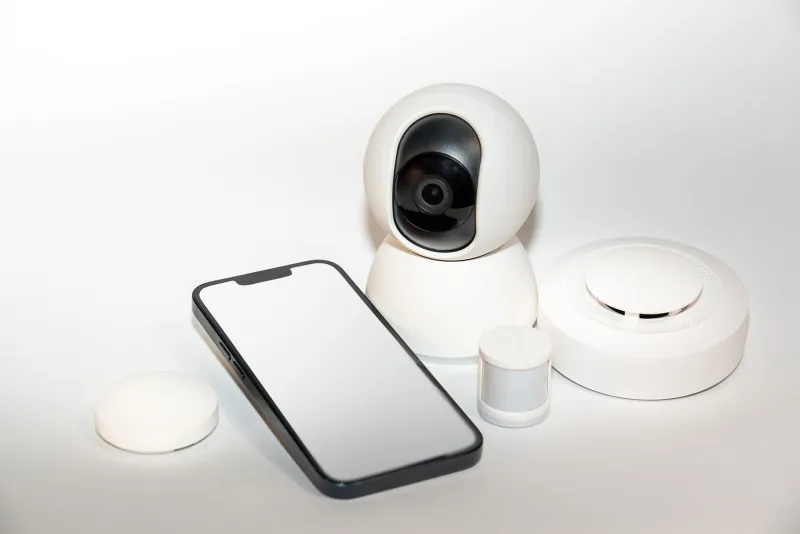
The marketing pitch for smart home technology has always carried an implicit promise: a safer, more aware household. Ring doorbells that alert you to visitors. Nest thermostats that learn your schedule and adjust accordingly. Smart locks that log every entry. Wi-Fi-connected lighting systems that simulate occupancy while you travel. On the surface, these devices appear to be tools of protection. Beneath it, they are generating a continuous stream of behavioral data — and not all of it stays within your walls.
Researchers, security professionals, and, increasingly, law enforcement investigators have documented a troubling pattern: the very metadata produced by smart home ecosystems can be harvested, interpreted, and exploited to determine when a home is occupied, when it is not, and how predictable the occupants' routines truly are.
The Data Your Devices Leave Behind
Every connected device on a home network communicates. It sends signals to manufacturer servers, receives firmware updates, pings cloud infrastructure, and logs activity timestamps. What most consumers do not appreciate is how much of that communication is observable — not just by the companies that built the devices, but potentially by anyone with access to the network traffic or the platform's data ecosystem.
Consider a smart thermostat. Its core function is to learn your schedule: when you wake, when you leave for work, when you return, when you sleep. That information is stored in the cloud, associated with your account, and in many cases shared with third-party partners under broad terms of service language that few users read carefully. A data broker who acquires that behavioral profile does not see it as a comfort preference — they see a precise daily routine attached to a home address.
Doorbell cameras introduce a different category of risk. Motion logs and video timestamps create a detailed record of when activity occurs at a property — and, crucially, when it stops. A Ring device that recorded consistent motion every morning and evening for months, then goes silent for ten days, is effectively announcing a vacation to anyone who can access that log. In documented cases reviewed by security researchers, attackers have used compromised smart home accounts — obtained through credential stuffing attacks against reused passwords — to surveil targets remotely before a physical intrusion.
Network Traffic as a Surveillance Tool
Beyond cloud-stored logs, the local network traffic generated by smart home devices is itself a rich source of intelligence. A 2020 study from researchers at Princeton University demonstrated that even encrypted traffic from smart home devices could be analyzed to infer user behavior with high accuracy — not by breaking the encryption, but by examining the timing, volume, and frequency of data packets.
A smart plug that powers a coffee maker, for instance, produces a recognizable traffic signature every morning. A connected television generates distinct patterns during evening viewing hours. When those patterns disappear, the silence is itself informative. Researchers coined the term "traffic fingerprinting" to describe the technique, and while it requires some degree of network proximity or access, it is not beyond the capability of a motivated adversary with basic technical literacy.
For residents in apartment buildings, condominiums, or densely networked suburban neighborhoods, this proximity concern is not hypothetical. Shared Wi-Fi infrastructure, Bluetooth beacon scanning, and even the passive observation of which smart home hubs are broadcasting device discovery signals on local networks can reveal a surprising amount about a neighbor's home configuration and activity schedule.
Documented Exploitation and Real-World Cases
Law enforcement records and cybersecurity incident reports have begun to surface cases in which digital intelligence preceded physical crime. In several documented burglary investigations across the United States, detectives found evidence that perpetrators had identified targets partly through social media postings that inadvertently confirmed smart home ownership — vacation-mode announcements, photos of Ring installation, or geotagged posts from trips abroad.
In a more technically sophisticated category of incident, attackers who compromised smart home accounts through phishing campaigns or credential stuffing were found to have used the resulting access not for immediate financial gain, but for surveillance. Monitoring camera feeds, reviewing motion logs, and tracking thermostat schedules gave them a window into a property's vulnerability before any physical action was taken.
The Federal Trade Commission has taken action against smart device manufacturers for inadequate data security practices, and several state attorneys general have opened investigations into the scope of behavioral data sharing between device platforms and advertising ecosystems. However, regulatory action has not kept pace with the proliferation of connected devices, which now number in the billions across American homes.
Why Manufacturer Defaults Are Insufficient
Out-of-the-box configuration for most smart home devices prioritizes ease of use over privacy. Default settings typically enable cloud logging, third-party data sharing, and broad permissions that grant platform operators extensive access to behavioral data. Many devices do not support local-only processing — meaning your thermostat's schedule data must travel to a remote server even if you never personally consult it from outside your home.
Firmware update mechanisms, while necessary for security patching, also represent a persistent communication channel that can expose device identity and network topology information. Devices that lack automatic update functionality, meanwhile, accumulate unpatched vulnerabilities that create entry points for attackers seeking access to the broader home network.
Practical Hardening Strategies
Securing a smart home ecosystem requires a layered approach that goes well beyond the manufacturer's setup wizard.
Network segmentation is among the most effective interventions available to consumers. Placing smart home devices on a dedicated guest network or VLAN isolates them from computers, phones, and other devices that hold sensitive personal data. If a thermostat or doorbell camera is compromised, the damage is contained.
Account hygiene is equally critical. Every smart home platform account should use a unique, strong password and, where available, multi-factor authentication. Credential stuffing attacks succeed precisely because users recycle passwords across platforms — a breach at one service becomes a key to every other account that shares those credentials.
Review and restrict data-sharing permissions within each platform's privacy settings. Many apps offer granular controls over what data is retained, how long it is stored, and whether it is shared with third parties. These settings are rarely surfaced prominently, but they exist and they matter.
Disable features you do not use. If your smart lock does not need to send entry logs to a cloud server, disable that functionality. If your thermostat's learning mode is unnecessary, turn it off. Reducing the volume of data generated is the most direct way to reduce exposure.
Be deliberate about vacation announcements. Social media posts confirming travel, combined with the publicly observable silence of a smart home system, create a correlated signal that is more informative than either data point alone. Security professionals routinely advise against broadcasting departure schedules on any platform.
The Convenience Calculus
None of this is an argument against smart home technology. The convenience and genuine security benefits these devices offer are real. A well-configured smart lock is more auditable than a mechanical one. A properly secured camera system provides evidence that has resolved countless insurance disputes and criminal investigations.
The problem is not the technology itself — it is the assumption that the default configuration is adequate, and that the primary threat model is the uninvited visitor at the front door rather than the data flowing silently out the back. In a connected home, every device is a potential witness. The question worth asking is: who else is listening to its testimony?