Hard Drives Don't Die Quietly: The Physical Breach Hiding at the End of Your Driveway
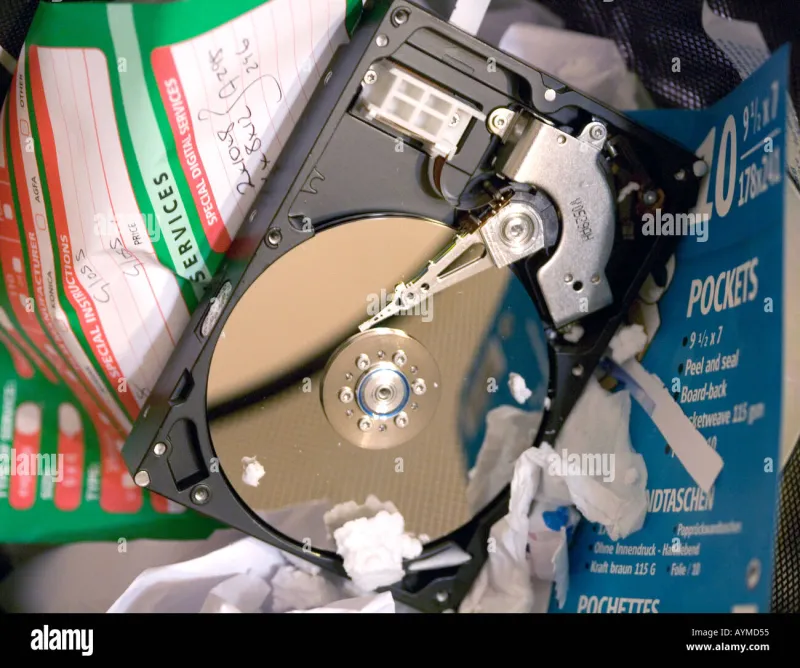
Photo: discarded hard drive and shredded papers in trash bin, via c8.alamy.com
Cybersecurity professionals spend their careers worrying about zero-day exploits and nation-state intrusions. Meanwhile, some of the most productive data theft in America happens with a flashlight and a pair of gloves, at the edge of a driveway the night before collection day.
Physical disposal remains the most neglected stage of the data lifecycle. The industry phrase worth remembering is simple: hardware never forgets.
What Actually Turns Up in the Bin
Security researchers who have audited discarded hardware — sometimes purchasing pallets of secondhand drives from surplus auctions — consistently find recoverable data on a substantial share of them. The same principle applies to residential trash.
The haul from a typical curbside audit can include:
- Old computers and external drives whose owners assumed deletion was destruction. It is not. Dragging files to the trash and emptying it removes the pointers, not the data.
- Printed boarding passes, event tickets, and shipping labels bearing names, frequent flyer numbers, and partial addresses.
- Prescription bottles and pharmacy bags with full names, drug names, prescriber information, and dates — enough for both identity theft and targeted pharmaceutical scams.
- Routers and set-top boxes returned to retail or tossed out, often with configuration stickers revealing default credentials and network details that can assist later attacks.
- Pre-approved credit offers and tax documents, the classic staples of dumpster-diving identity theft.
For small businesses, the exposure compounds. Discarded office equipment, copier hard drives, and unshredded personnel files have repeatedly landed organizations in regulatory hot water — because under federal disposal rules, businesses have a legal duty to destroy consumer information properly, not merely throw it away.
Why 'Deleted' Means So Little
Modern storage rarely erases anything on the first pass. Solid-state drives complicate matters further, as wear-leveling spreads data across memory cells in ways that make conventional wiping unreliable. A file that appears gone from the folder view may sit intact in a portion of the drive the operating system has quietly set aside.
This is not an obscure technicality. It is the mechanism by which a 'clean' laptop donated to charity, resold, or trashed becomes someone else's archive of tax returns, saved passwords, and family photographs.
A Sanitization Checklist Before Anything Leaves the House
The defense is procedural, not technological heroics:
- Wipe drives with dedicated software that performs a full overwrite, or use the manufacturer's built-in reset tools designed for this purpose.
- When in doubt, destroy. For drives containing deeply sensitive material, physical destruction — pulling and damaging the platters or flash chips — is the only guarantee.
- Shred paper with any identifying detail, not just financial statements. Prescription labels and shipping slips count.
- Factory-reset networking equipment and change default credentials before disposal or resale.
- Time your disposal. Putting identifiable trash out the morning of collection rather than the night before removes the window that makes casual scavenging possible.
The Last Unencrypted Link
Organizations spend fortunes encrypting data in transit and at rest, then hand a complete copy of that data to the municipal waste stream. Until disposal is treated with the same rigor as every other security control, the curbside bin will remain what it is today: the least defended breach in America, scheduled weekly, no password required.