The Second Factor Illusion: How Attackers Are Quietly Defeating the Authentication Layer You Thought Was Protecting You

The Promise and the Problem
For the better part of a decade, cybersecurity professionals and consumer-advocacy organizations have delivered the same message to American internet users: enable two-factor authentication, and your accounts become dramatically harder to compromise. That advice remains sound in principle. In practice, however, attackers have methodically studied every implementation of 2FA on the market and found the cracks — not by breaking encryption or deploying exotic zero-day exploits, but by targeting the far more accessible layer that sits beneath most people's second factor: the email inbox.
The result is a troubling gap between the protection users believe they have and the protection they actually possess. Understanding that gap requires walking through the specific attack chains that threat actors use today, in the order they tend to escalate.
Attack Chain One: The Email Account as a Master Skeleton Key
Most Americans use a single primary email address as the recovery option for dozens — sometimes hundreds — of downstream accounts. Banking portals, social media platforms, healthcare patient portals, brokerage accounts, and retail loyalty programs all share one common design assumption: if you can prove you control the registered email address, you are who you claim to be.
Attackers understand this architecture intimately. Rather than attempting to defeat the 2FA on a high-value target account directly, they work one level upstream. A credential-stuffing attack against a reused email password, a convincing phishing page that mimics Gmail or Outlook, or a malicious OAuth application granted access through a careless click — any of these can hand an attacker full, persistent access to an email inbox without triggering a single 2FA prompt on the accounts that inbox protects.
Once inside, the attacker does not necessarily announce their presence. They may quietly configure a forwarding rule, routing all incoming messages to an external address while deleting the forward confirmation from the sent folder. From that position, every SMS verification code, every one-time link, and every account-recovery email flows silently to the attacker in parallel with the legitimate user. The victim's account remains functional; nothing appears wrong. The compromise can persist for weeks before a downstream account is actually touched.
Attack Chain Two: SMS Interception and the SIM-Adjacent Threat
SMS-based 2FA — the six-digit code delivered by text message — has been the most widely deployed second factor in consumer-facing services for years. Its popularity is understandable: it requires no additional app, no hardware token, and no user education beyond receiving a text. Its weakness is equally well-documented.
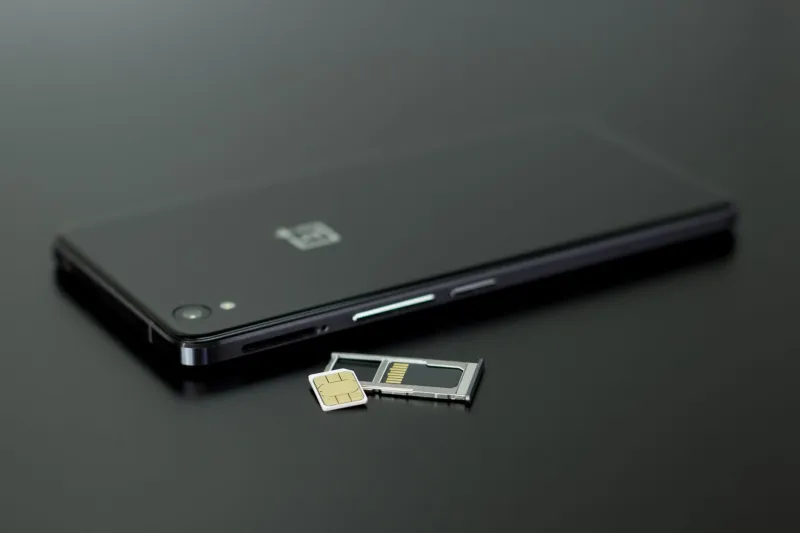
SIM swap fraud, in which an attacker socially engineers a wireless carrier into transferring a victim's phone number to an attacker-controlled SIM card, has been covered extensively in the security press. Less discussed is a related technique that does not require any interaction with a carrier at all: SS7-based interception. The Signaling System No. 7 protocol, a telecommunications standard that dates to the 1970s, contains architectural vulnerabilities that allow parties with access to the global telephony network — including some commercially available surveillance tools — to intercept SMS messages in transit. While this attack vector is not available to casual criminals, it is well within reach of nation-state actors and sophisticated organized-crime groups targeting high-value individuals.
For the majority of everyday attacks, however, the threat is less exotic: phishing pages that request both a password and the SMS code in real time, forwarding them instantly to the attacker before the thirty-second window expires.
Attack Chain Three: Adversary-in-the-Middle Proxy Kits
The most technically refined threat to 2FA in widespread use today is the adversary-in-the-middle, or AiTM, phishing kit. Unlike a traditional phishing page that simply harvests credentials, an AiTM proxy sits between the victim and the legitimate website, relaying traffic in both directions in real time.
When a victim visits what appears to be their bank's login page, they are actually interacting with a transparent proxy. Their username and password are captured as they type them. The proxy simultaneously submits those credentials to the real bank. The bank responds with a 2FA challenge — an SMS code, an authenticator app prompt, or an email link. The victim completes that challenge on the proxy page. The proxy captures the resulting session cookie and submits it to the real bank before it expires, establishing a fully authenticated session on the attacker's end.
Kits capable of executing this attack chain are commercially available on underground markets for a few hundred dollars. Tools such as Evilginx, Modlishka, and others in the same family have been documented by researchers at Microsoft, Proofpoint, and independent security firms. They require no novel vulnerability — only a convincing domain, a valid TLS certificate, and a victim who clicks a link.
Not All Second Factors Are Equal
The picture painted above is sobering, but it does not mean 2FA is worthless — it means that some implementations are meaningfully more resistant to modern attack techniques than others. The following represents a practical ranking for US readers evaluating their options.
Hardware security keys using FIDO2/WebAuthn sit at the top of the hierarchy. Devices such as YubiKeys or Google's Titan Security Key bind authentication cryptographically to the specific domain of the legitimate website. An AiTM proxy operating on a lookalike domain cannot satisfy the origin-binding requirement, making phishing-based interception structurally impossible. For accounts that support it — Google, Microsoft, GitHub, and a growing number of financial institutions — a hardware key is the single most effective consumer-grade second factor available.
Passkeys, the FIDO2-based credential standard now being rolled out by Apple, Google, and Microsoft, offer similar phishing resistance and are increasingly available without any additional hardware purchase. They represent the most accessible path to phishing-resistant authentication for most Americans today.
TOTP authenticator apps — Google Authenticator, Authy, Microsoft Authenticator, and similar tools — are substantially more secure than SMS codes. They are not carrier-dependent, eliminating SIM swap risk. They are, however, still vulnerable to real-time AiTM interception, since a proxy can relay the six-digit code within its thirty-second validity window. They remain a significant upgrade over SMS and should be preferred wherever hardware keys are unavailable.
SMS-based 2FA is better than no second factor, despite its well-documented weaknesses. For the majority of attacks — credential stuffing, bulk phishing, account-recovery abuse — an SMS code still represents a meaningful barrier. Users who have no alternative should keep it enabled rather than disabling 2FA entirely, while advocating with their service providers for stronger options.
Email-based one-time codes and magic links are the most fragile implementation in common use, for the reasons detailed above. Their security is precisely as strong as the security of the email account receiving them — which, for most users, is the account most likely to be targeted first.
What to Do Right Now
The practical takeaway for American readers is straightforward, if not always convenient. Audit the recovery options on your primary email account and treat that account as the highest-security asset in your digital life. Enable the strongest available second factor on it — ideally a hardware key or a passkey. Review the accounts that list your email address as a recovery option and remove SMS or email-based 2FA wherever a stronger alternative exists. Check your email settings for unfamiliar forwarding rules or connected third-party applications.
Two-factor authentication has not failed. It has evolved into a contested space where the specific implementation matters enormously. The users who understand that distinction are the ones who will remain standing when the next wave of AiTM campaigns begins.